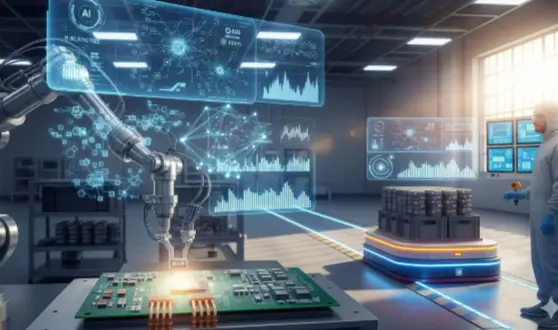

Artificial intelligence powers industrial automation by enabling systems to learn from data, predict failures, and optimize processes in real time. It supports autonomous decision loops, modular algorithm design, and standardized data normalization, improving reliability and interpretability. In robotics and real-time control, AI drives scalable autonomy and secure operations. The result is higher inspection accuracy, predictive maintenance, and actionable sensor insights that strengthen resilience. The next move hinges on integrating data, governance, and measurable outcomes to sustain momentum.
What AI Brings to Industrial Automation
Artificial intelligence transforms industrial automation by enabling systems to learn from data, predict failures, and optimize processes in real time. This empowers organizations to reimagine operations with autonomous decision loops, scalable throughput, and resilient supply chains.
Algorithm design evolves toward modular, transparent constructs, while data normalization standardizes inputs for reliable insights.
Freedom-seeking leaders harness these insights to drive continuous, measurable performance improvements.
AI in Robotics and Real-Time Control
The approach emphasizes scalable autonomy, measurable throughput, and resilient orchestration.
Strategic investments advance robot ethics and cyber physical security, safeguarding decisions and interfaces while expanding freedom to reconfigure systems, optimize safety margins, and sustain competitive advantage through data-driven iteration.
See also: laidings
Ensuring Quality and Predictive Maintenance With AI
The approach elevates inspection accuracy and enables maintenance forecasting, translating sensor streams into actionable insights.
Decisions become measurable, risk-aware, and scalable, empowering teams to optimize uptime, reduce waste, and sustain freedom through transparent, objective performance analytics.
AI-Driven Insight for Operations and Supply Chain
This paradigm empowers autonomous orchestration, rapid scenario testing, and resilient networks, while preserving data privacy and ensuring energy efficiency.
Stakeholders gain clarity to pursue freedom through optimized inventories, reduced waste, and adaptive logistics, aligning strategic goals with tangible, measurable performance and sustainable growth.
Frequently Asked Questions
How Does AI Impact Worker Safety in Automation Environments?
AI enhances worker safety by enabling real-time hazard detection, proactive safety training, and predictive maintenance scheduling; it supports waste reduction through optimized workflows, while empowering operators with data-driven insights and strategic autonomy for safer, liberated work environments.
What Are the Energy Efficiency Benefits of AI in Plants?
Energy efficiency gains arise from AI-guided monitoring and control, enabling plant optimization through predictive maintenance, load balancing, and real-time adjustments. This strategic, data-driven approach empowers independent operation, reduces waste, and supports a freer, more resilient industrial future.
Can AI Reduce Startup and Teardown Times for New Lines?
AI can reduce startup and teardown times for new lines, enabling startup optimization and teardown acceleration. The vision is data-driven, strategic, and free-form, portraying imagery of streamlined workflows unlocking faster deployment and autonomous decision-making across dynamic manufacturing environments.
How Is AI Used to Manage Legacy Equipment Integration?
AI orchestrates legacy integration by translating disparate protocols into a unified data fabric, enabling proactive maintenance and cross-system interoperability. It harnesses predictive analytics, standardized interfaces, and real-time telemetry to drive autonomous decision-making and enhanced equipment interoperability across platforms.
What Are Common Biases in Ai-Driven Industrial Decisions?
One in four AI-driven industrial decisions show bias, a statistic illustrating subtle prejudices. Bias tracing and model drift emerge as common challenges, demanding proactive governance to sustain trust, resilience, and freedom in scalable, data-driven automation strategies.
Conclusion
In a future where factories whisper to their own machines, AI choreographs every tick with data-driven grace. Precision becomes a default setting, not a gamble; downtime shrinks as predictive insight outpaces failure. Robotics, control, and supply chains harmonize into a single, auditable nervous system—transparent, scalable, secure. The vision: autonomous, resilient operations guided by measurable improvements and strategic foresight, where dashboards read like prophecy. Satire aside, the trajectory is clear: intelligence amplifies efficiency, not ambiguity.